This week, I expanded my circuit project by adding an LED and a piezo buzzer, working with Diana to create our own melodies. As this was my second time building a circuit, I found the process much easier, and it was encouraging to feel more confident with the fundamentals. I was particularly proud of the fact that I could now wire an LED without needing help or referencing any guides, something that might seem small but felt like a genuine milestone in my learning journey.
Working with the piezo buzzer was also enjoyable, especially because it doesn’t require a resistor, which simplified the wiring process. I experimented with Google’s Chrome Music Lab to create a melody, although I quickly realised that my lack of musical ability made it a bit tricky to produce something that sounded pleasant. Despite that, the creative process was fun, and I appreciated the opportunity to combine coding, electronics, and sound design.
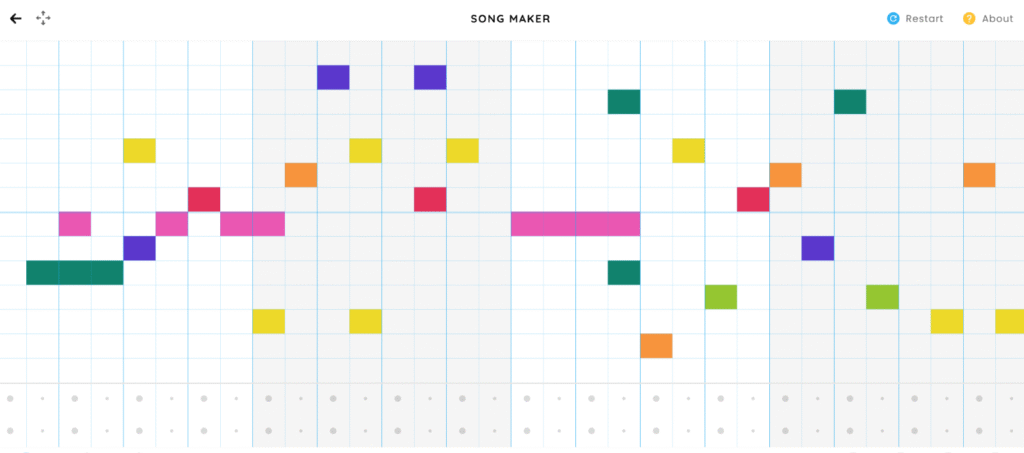
However, I encountered a limitation that challenged my initial plan. I had hoped to create a layered piece using three buzzers playing simultaneously, each with a different melody. After quite a bit of trial and error, I discovered that piezo buzzers can’t effectively play at the same time, at least not with the hardware and code we were using. Initially, this felt like a setback and a waste of time, but in hindsight, it was a valuable learning moment. I now have a better understanding of the limitations of piezo buzzers and how to troubleshoot circuit design more effectively.
constexpr Note melodyA[12] = {
  {NOTE_E4, 400},
  {NOTE_E4, 200},
  {NOTE_G4, 400},
  {NOTE_A4, 200},
  {NOTE_E4, 200},
  {NOTE_C4, 600},
  {NOTE_D4, 400},
  {NOTE_E4, 400},
  {NOTE_F4, 200},
  {NOTE_E4, 200},
  {NOTE_G4, 400},
  {NOTE_A4, 600},
};

constexpr Note melodyB[12] = {
  {NOTE_C4, 400},
  {NOTE_C4, 200},
  {NOTE_E4, 400},
  {NOTE_F4, 200},
  {NOTE_C4, 200},
  {NOTE_A3, 600},
  {NOTE_B3, 400},
  {NOTE_C4, 400},
  {NOTE_D4, 200},
  {NOTE_C4, 200},
  {NOTE_E4, 400},
  {NOTE_F4, 600},
};

constexpr Note melodyC[12] = {
  {NOTE_A3, 400},
  {NOTE_A3, 200},
  {NOTE_C4, 400},
  {NOTE_D4, 200},
  {NOTE_A3, 200},
  {NOTE_E3, 600},
  {NOTE_B3, 400},
  {NOTE_A3, 400},
  {NOTE_D4, 200},
  {NOTE_B3, 200},
  {NOTE_C4, 400},
  {NOTE_E3, 600},
};
This week also prompted some early thoughts about my upcoming essay. I’m currently leaning towards exploring toxic online cultures, particularly within gaming communities. As a woman who enjoys online gaming, this is a topic that resonates with me on a personal level. I believe it’s important to critically examine how digital spaces can both empower and harm users, and this project could give me a chance to reflect on those issues through a more academic lens.
Overall, this week was a good mix of practical hands-on work and reflective thinking. I improved my technical skills, explored some of the creative challenges of sound in circuit design, and began to shape ideas around digital ethics that could influence future projects.